1. Add or edit tax code

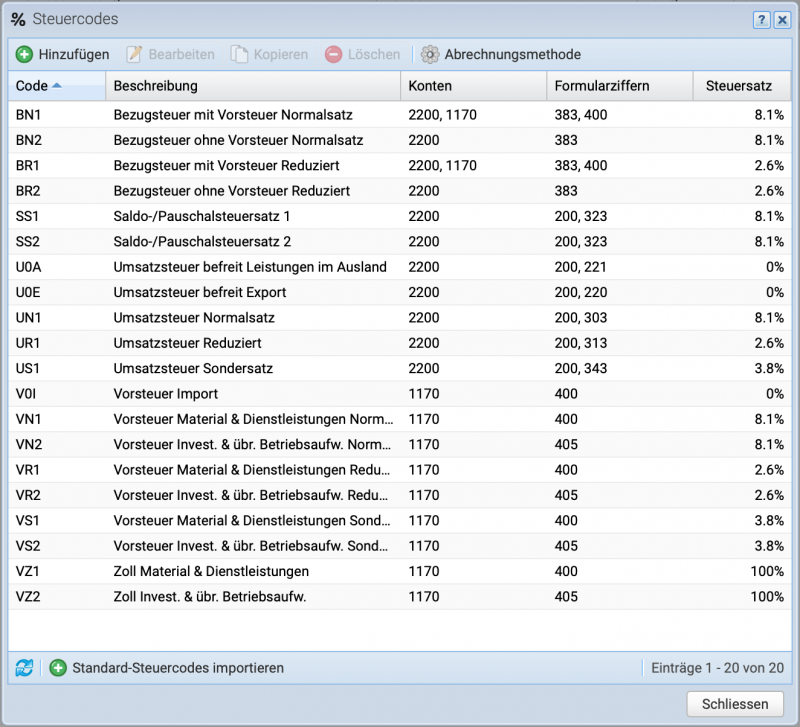
If the tax codes for acquisition tax are not yet available, they can be imported using the Import Default Tax Codes button or created manually. When importing, all tax codes are imported, not just those for purchase tax.

To create a tax code, open the overview via Settings Tax Codes and click Add.

Fill in the tax code BN1 as shown in the screenshot. For additional tax codes such as BN2, BR1, and BR2, refer to the configuration in the next section.
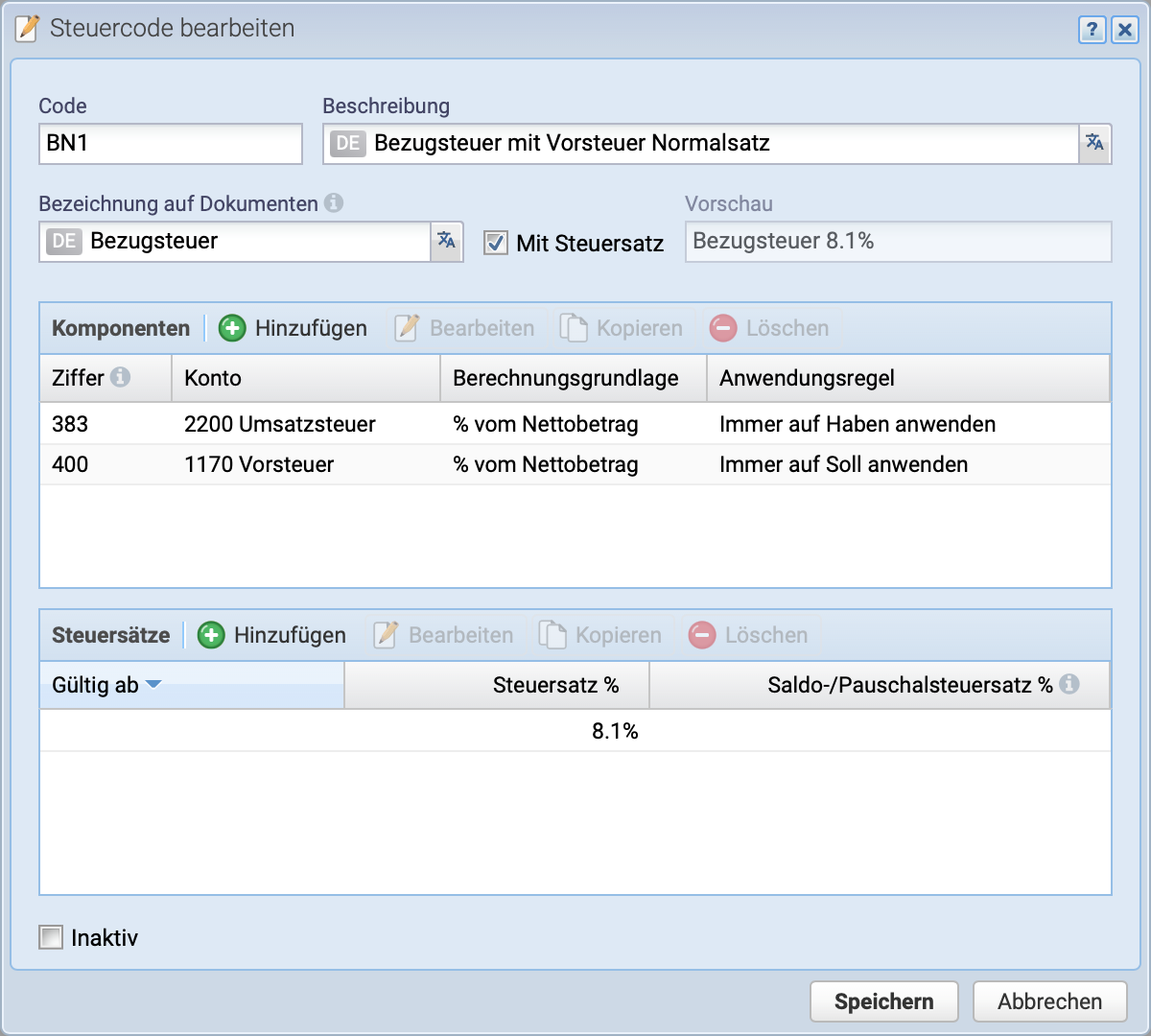
Screenshot of the “Add Tax Code” dialog box.

2. Configuration of acquisition tax codes

Code     Description     Accounts     Form numbers     Tax rate     Calculation basis     Rule of application
BN1     Acquisition tax with input tax standard rate     2200     383     8.1%     % of net amount     Always apply to the credit side
            1170     400     "     % of net amount     Always apply to the debit side
BN2     Acquisition tax without input tax standard rate     2200     383     8.1%     % of net amount     Always apply to the credit side
BR1     Acquisition tax with input tax reduced rate     2200     383     2.6%     % of net amount     Always apply to the credit side
            1170     400     "     % of net amount     Always apply to the debit side
BR2     Acquisition tax without input tax reduced rate     2200     383     2.6%     % of net amount     Always apply to the credit side

3. Create manual book entry with acquisition tax

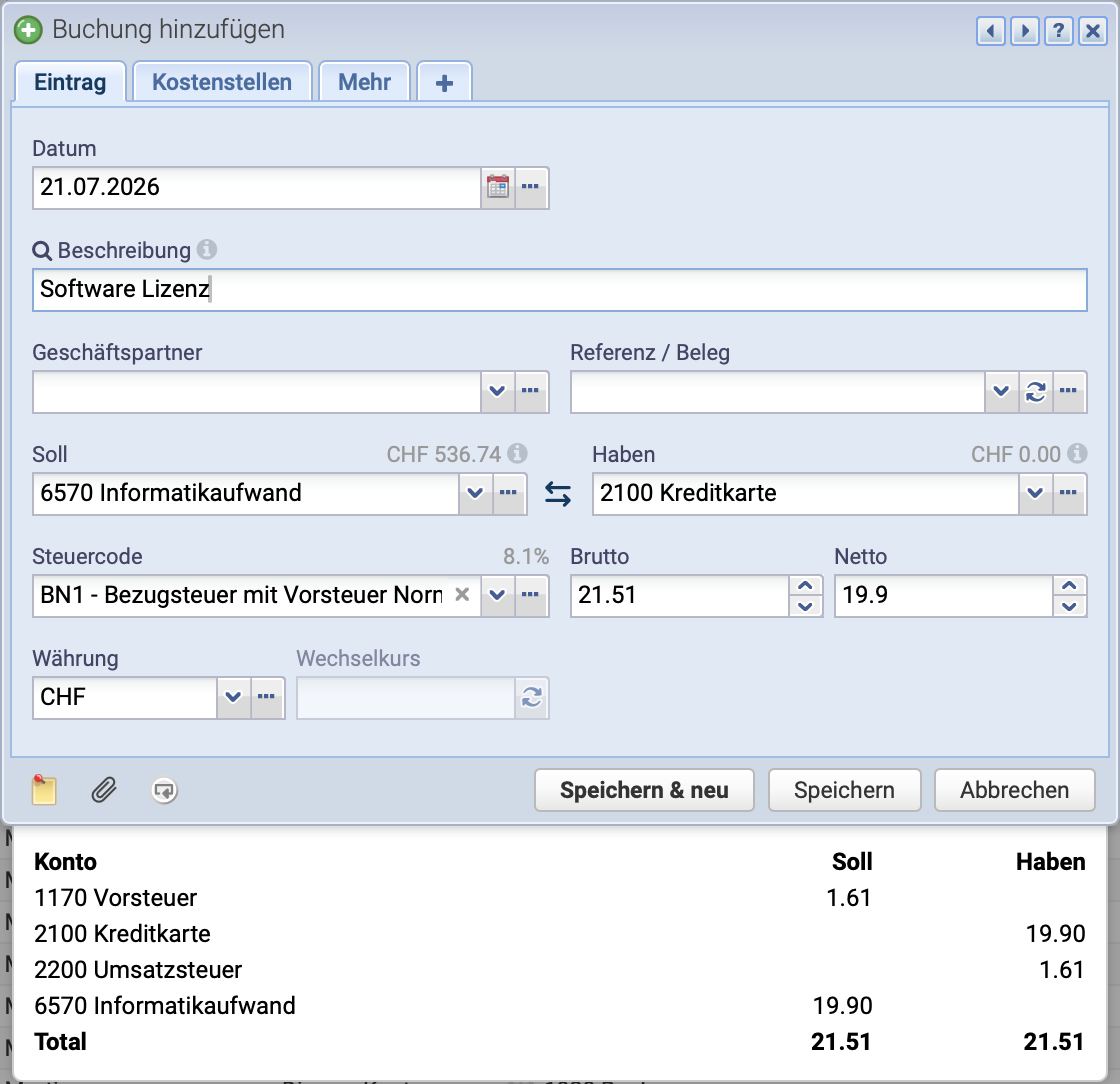
When making a manual entry in the journal, the amount actually paid is entered in the Net field. After entering the tax code, a preview area appears below the booking window, showing the appearance of the book entries that are being booked to which accounts.

Screenshot des Buchung Hinzufügen Dialogs in CashCtrl

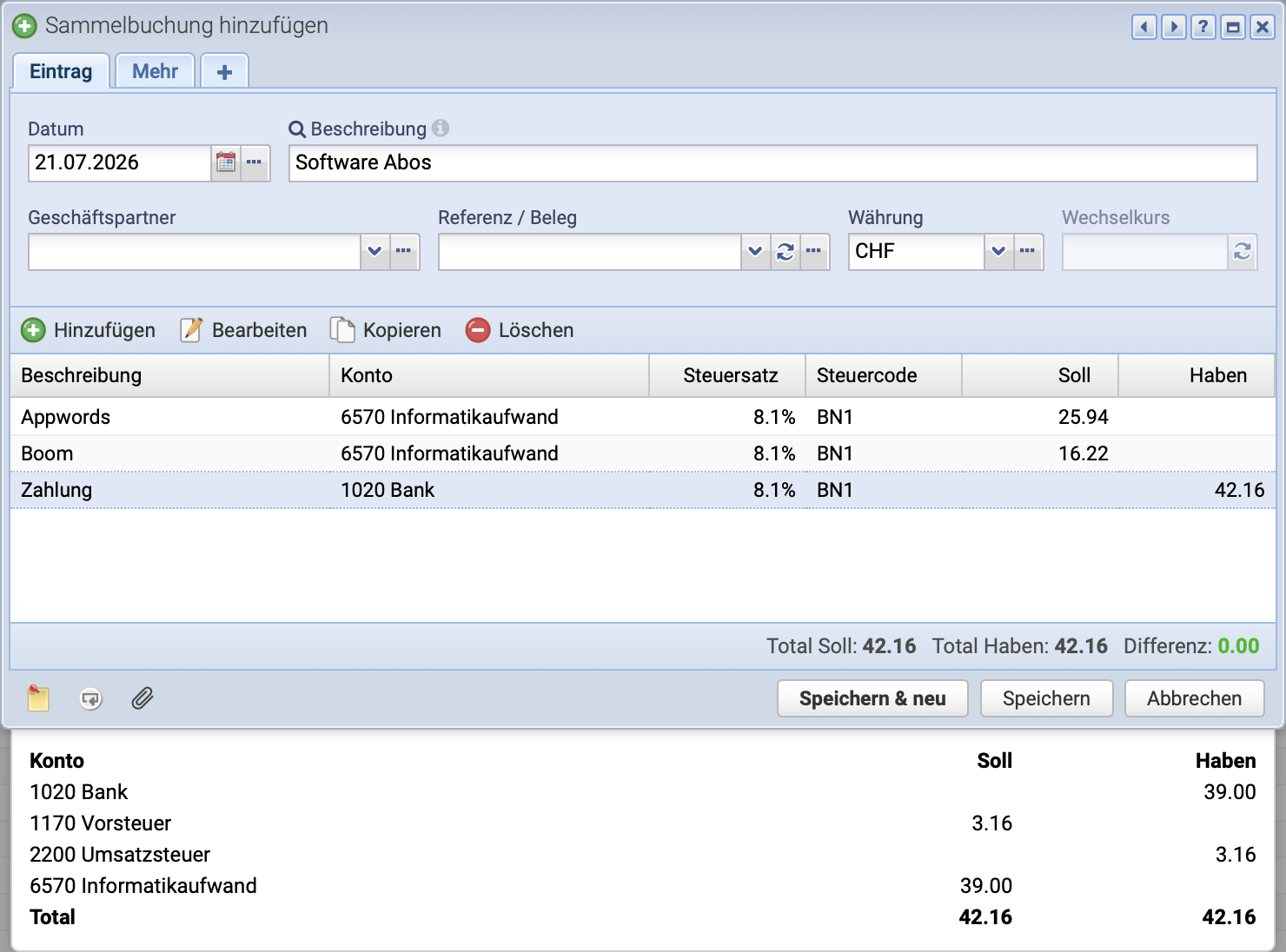
4. Create collective book entry with acquisition tax

For collective book entries involving acquisition tax, the tax code must be set on both sides of the transaction in the collective book entry  — for example, also on the credit side of the contra account (bank/post/credit card).

The amount actually paid (bank/post/credit card) must be entered in the Net field, not Gross. You can check whether the figures are correct in the white preview panel at the bottom.

Screenshot of the “Add collective entry” dialogue in CashCtrl

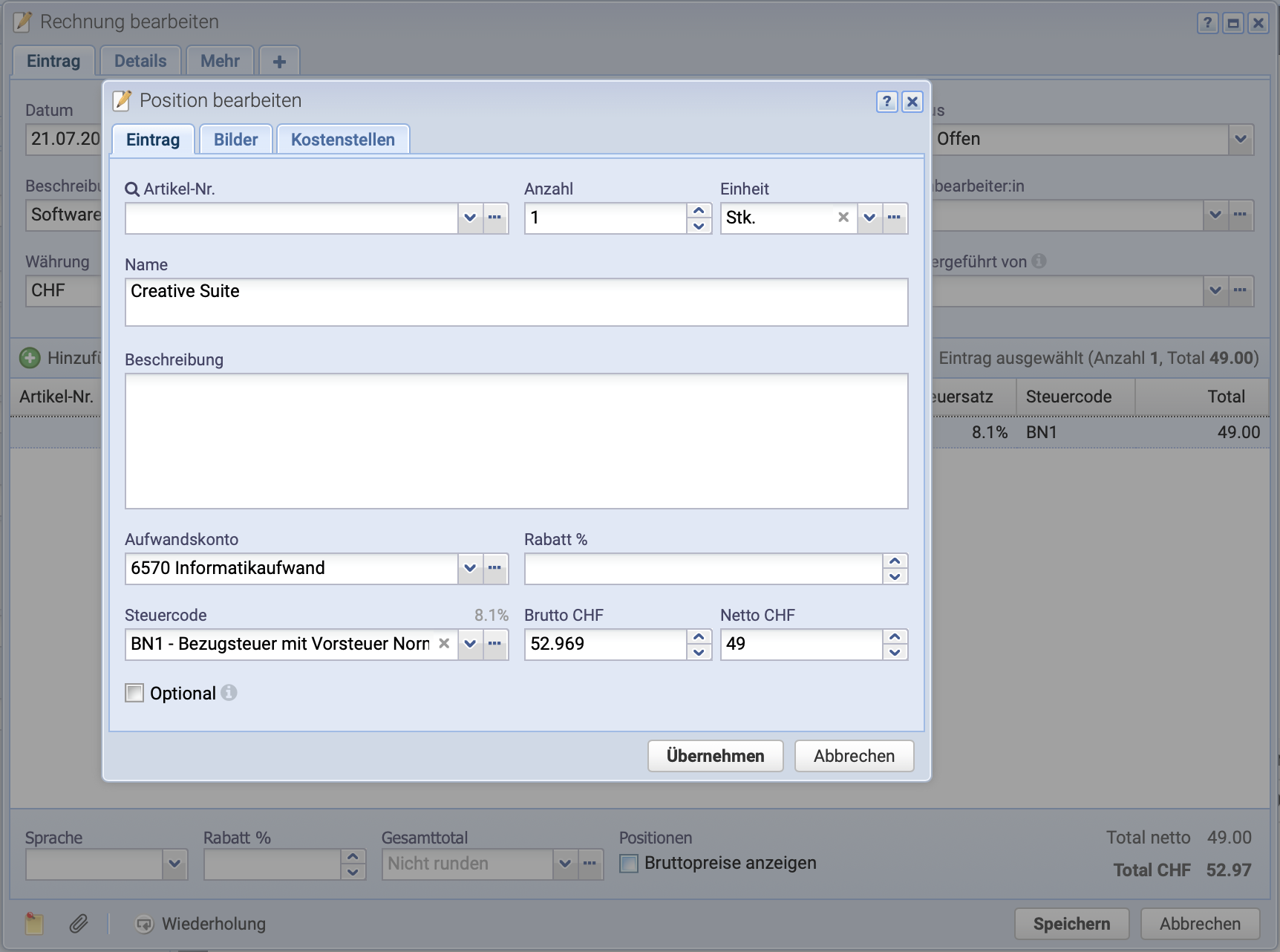
5. Add purchase invoice with acquisition tax

In the Orders section under the Purchase tab, click Add to create a new creditor/purchase invoice. When adding positions, set the tax code to acquisition tax and enter the amount to be paid in the Net field. When booking the payment, the outstanding (net) amount will be suggested automatically.

That's it :-)

Screenshot of the “Add order dialog”

Good to know

  • When importing bank transactions (camt files) or credit card statements (csv), CashCtrl automatically enters the paid amount in the Gross field. If the acquisition tax code is then set, the amount must be transferred from the Gross field to the Net field.
  • When does acquisition tax apply?
    The acquisition tax is a consumption tax that, under certain conditions, applies to the receipt of services from abroad. It is levied when a domestic recipient of services supplies materials to foreign companies or receives services under the recipient location principle—such as consulting, advertising, or data processing. The import of data carriers containing rights or services may also be taxable.
    Registered taxable persons must declare such acquisitions, while non-registered persons become liable for acquisition tax once their annual volume exceeds CHF 10,000. Exceptions apply if the services are tax-exempt.
    For further information, see the Federal Tax Administration (FTA).

lightbulb illustration